

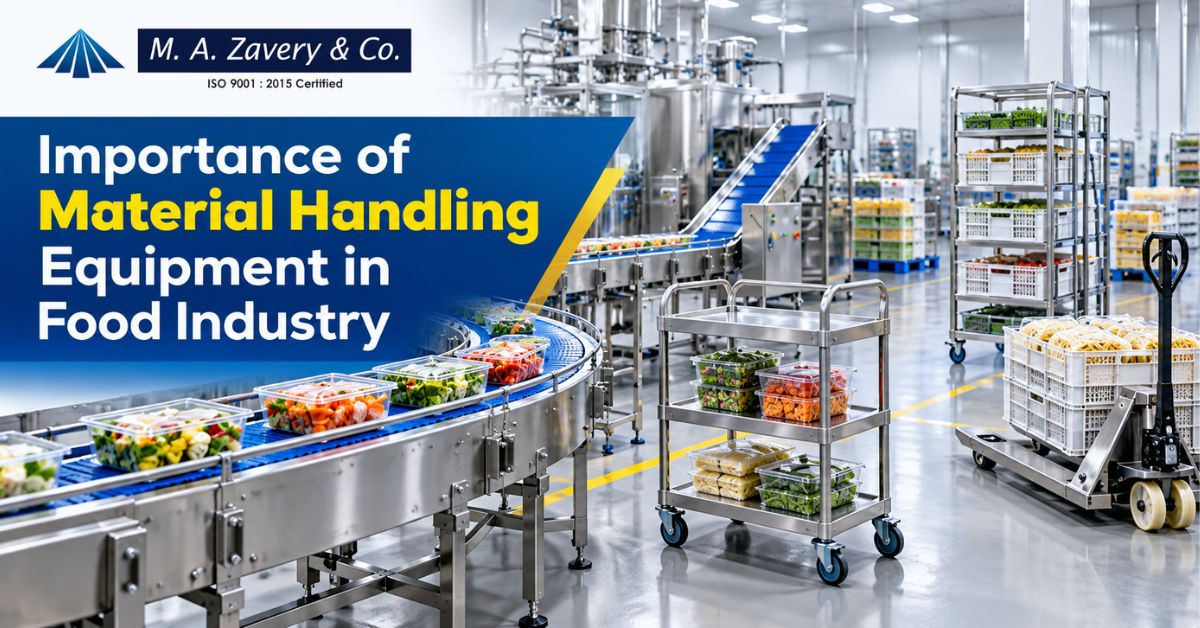
Plants that provide food move a lot of weight. Sacks of flour, drums of oil, stainless vats, motors, conveyors, and pallets all have to be moved somewhere, and they have to be moved safely and cleanly. The equipment that moves it is often an afterthought to the recipe or the packaging line. That’s an error. Here are 10 reasons why the right handling equipment protects your food, your people, and your budget.
Quick Answer: Food plants care about handling equipment because it:
- Encourages food safety and hygiene
- Contamination from cut risk
- Prevents injury to workers
- Keeps production up
- Limits damage and waste to products
- Cold chain protection
- Makes heavy maintenance safe.
- Decreases dust and explosion hazard
- Assists with Audits & Compliance
- Reduces long-term costs
This is why they all matter.
What Counts as Material Handling Equipment in a Food Plant?
The term covers any equipment that lifts, moves, positions, or holds loads. Forklifts, conveyors, and pallet trucks handle the daily product flow. Lifting and rigging gear handles the heavier, less frequent jobs: setting a mixer motor, swapping a pump, lowering a tank, or loading machinery at the dock.
The article is based on the second group: hoists, trolleys, floor cranes, winches, slings, and lifting points. They all apply to the whole category alike.
1. It Supports Hygiene and Food Safety
Good design is the basis of clean equipment. The FSSAI hygiene rules in India say that equipment and containers that contact food should be made from good-quality materials such as stainless steel or other non-corrosive materials. They should be easy to clean and keep in good condition. US guidance is even more stringent, with food contact surfaces being non-toxic, non-absorbent, non-reactive, non-corrosive, and cleanable, with smooth polished welds and no recessed fasteners.
The same logic should apply to handling gear that works near an open product. Sealed joints and smooth surfaces make it easier for dirt to wash away. An exposed-threaded or chipped-coated trolley is a hygiene problem waiting to happen.
2. It Cuts Contamination Risk
When a load is moved, something can fall, drip, or rub off. Good handling equipment keeps these risks small.
- Food-safety standards require that no paint be applied to any surface that comes in contact with food.
- A product line should be used sparingly, and food-grade lubricant should be used over the product line.
- FSSAI guidance states that equipment used for food shall not be used for storage of non-food items, and raw and prepared foods shall be stored in separate equipment that is cleaned before each use.
- Maintenance personnel working in food areas must observe the same hygienic regulations as production personnel.
Overhead hoists and lifting points will safely lift a load and keep it off the ground. This lessens drag, spills and contact with filthy surfaces.
3. It Prevents Worker Injuries
People tire of lifting heavy loads by hand. A government guide on manual handling in food manufacturing lists common risks from joint and nerve injuries to chronic pain and lists overhead hoists, pallet lifters and height-adjustable trolleys to reduce them. Wherever possible, the first step is to redesign or automate the task.
And the data shows this. NIOSH estimates that musculoskeletal injuries account for some 30 per cent of occupational injuries that result in time away from work. Material movers experience the greatest incidence of overexertion injuries. A US health hazard evaluation at a food plant also found that heavy lifting, twisting, and long reaches are associated with a high rate of strains and recommended redesigning equipment to cut the stress of heavy lifting.
A chain hoist or lever hoist places the weight on a rated machine, rather than on a person.
4. It Keeps Production Moving
Slow, clumsy handling creates bottlenecks. A pallet is sitting at the dock. Four people are waiting for a mixer part. A line sits idle while a motor is swapped out.
Mechanical assist devices help workers lift, push, or pull heavy materials. NIOSH associates them with fewer injuries and greater productivity. A tram allows a hoist to travel along a beam. Electric and manual hoists used to require larger crews, but small crews can do a lot of work.
5. It Reduces Product Damage and Waste
Rough handling damages food. India’s Ministry of Food Processing Industries has undertaken studies to measure losses at various stages of harvest and post-harvest, such as handling, storage, transportation, and processing. These are attributed to weak supply chain steps, harvesting, collection, sorting, grading, and weak transport and storage facilities, a government reply in Lok Sabha said.
The figures tell why this is important. The NABCONS 2022 study found tomato losses to be above 12 per cent, according to a data analysis site. Losses vary by crop and location, but the pattern is clear. Each additional drop, crush, or delay costs product.
Lifting gently and carefully will lessen the odds of dings, spills, and broken packs. Slow hoist speeds and smooth trolleys are useful when you put down heavy, fragile loads.
6. It Protects the Cold Chain
Chilled and frozen food has a short window. Every hour a load sits on the dock; it gets warmer. Studies in India indicate that fragmented cold chains and slow transport are responsible for the faster spoilage of tomatoes, fish, and poultry. The same data cited a government assessment that found cold-chain gaps in pack houses, ripening chambers, and refrigerated vehicles.
Handling equipment can not solve the whole chain, but it does cut the time loads are out of the cold. It all helps to load smoothly, position quickly, and make fewer stops.
7. It Makes Heavy Maintenance Safer
Food plants are driven by machines that need servicing: motors, gearboxes, pumps, screw conveyors and mixers. Many weigh hundreds of kilos. Crews cope without proper lifting equipment.
A rated hoist, trolley on a beam, and certified slings put you in control of the job. M.A.Zavery: Elephant manual hoists (C21, H-100, Super 100 and DAG 3t), YA Series lever hoist (pulling/positioning), Trolley Series (plain trolley), Yoke G100 (chain slings). Always check the rated load, material, and finish on the product page before using any of these in a food area.
8. It Controls Dust and Explosion Risk
This is the reason many food managers ignore. Flour, sugar, cocoa, spices, and starch can burn or explode when they are suspended in air. An industry article on dust hazards states that combustible dusts affect nearly every food manufacturing plant and connects the 2008 Imperial Sugar explosion to sugar dust. A university safety page adds that sources of ignition can include hot bearings, overheated motors, misaligned conveyors, and welding or cutting.
Gear management must be tailored to these zones. M.A.Zavery lists the Yalelift 360 ATEX hand chain hoist for possibly explosive atmospheres. If you are concerned about electric motors, Tiger pneumatic air hoists, such as the TAH52 (5 to 20 tonnes) and the TAH250 (25 to 60 tonnes), give you an air-powered option. Consult a qualified safety engineer to confirm the classification and rating of the zone for the equipment.
9. It Helps With Audits and Compliance
Auditors like to see you have hazards under control. The FSSAI rules specify sanitary and hygienic requirements for food manufacturers in Schedule 4. These require clean and well-maintained equipment that is designed for ease of cleaning. Equipment selection and maintenance protocols are defined by SQF and other quality codes.
That paper trail is handling equipment. Rated loads, serial numbers, inspection logs, and maintenance records show you manage lifting just like you manage everything else. Clean, certified, and well-recorded gear results in calmer audits.
10. It Lowers Long-Term Costs
Good equipment costs a lot up front. Bad equipment costs more down the line. A major U.S. study found that overexertion was the leading cause of workplace injuries, which led to $14.2 billion in direct costs, according to a blog post published by NIOSH that cites research from Liberty Mutual. Factor in product loss, repairs, and lost shifts, and the case for the right gear builds quickly.
- You achieve cost savings by:
- Fewer injuries and claims
- Less damaged product
- Faster and safer maintenance
- Longer life of equipment with proper checking
- Fewer failed audits
How to Choose Handling Equipment for a Food Plant
Follow these seven steps.
- Map your zones. Separate food contact, splash, dry storage, dock, and hazardous areas.
- Match material and finish. Non-corrosive, easy-to-clean surfaces should be used for wet or hygienic areas. See if there is a stainless or coated version.
- Lubricants. Keep product lines slick with food-grade lubricants and keep them to a minimum.
- Load size. Add rigging weight and margin, then go to the next rated size.
- Verify the environment. Check for dust, moisture, heat, and cleaning chemicals.
- Building inspection. Specify who will inspect what and how often, and keep written records.
- Train all operators on safe lifting, signals and what to do if gear looks damaged.
Material Handling Equipment Listed by M.A. Zavery
M.A. Zavery & Co. from Kolkata have been supplying hoists, winches, wire rope, and rigging gear since 1983. Its site states: For lifting and positioning jobs in a food plant
- Manual hoists: Elephant C21 Series, H-100 Series chain block, Super 100, DAG 3t, YA Series lever hoist
- Electric hoists: Alpha and Beta series, Stahl ST and STD chain hoists, SH wire rope hoists
- Hazardous environments: Yalelift 360 ATEX hand chain hoist and Tiger pneumatic air hoists
- Positioning Trolley Series: Plain Trolley and Manual Floor Crane
- Rigging: Chain slings, yoke G100, welded master links, Thiele shackles, and lifting eyes
- Winches: Maxpull manual and electric winches
The homepage does not list food-grade or washdown ratings, so be sure to check material, finish and coatings with the supplier for any hygienic zone.
Next Steps
Material handling equipment in food industry plants earns its stripes by protecting both people and product. Here’s a brief plan:
- Walk the plant and make a list of all lifts you do manually.
- Load Flag Above Safe Single-Person Lifting Capacity
- Mark hazardous and sanitary areas on a floor plan.
- Choose equipment based on the zone, load, and cleaning routine.
- Schedule inspections and keep records.
- Annually review the setup and train the crew.
FAQs
Why is material handling equipment important in the food industry?
It protects hygiene, reduces the risk of contamination, prevents injuries to workers, and reduces damage to the product. It also helps with production and supports audits. Every part of a food plant is safer and more predictable with controlled, certified handling gear.
What types of material handling equipment do food plants use?
Food plants utilise forklifts, conveyors, pallet trucks, hoists, trolleys, winches, slings, and lifting points. Heavy maintenance and positioning jobs are done by hoists and rigging. The right mix depends on the load, the zone and the cleaning routine.
Does handling equipment need to be stainless steel?
Stainless steel is often used for surfaces that come in contact with food because it is non-toxic, non-absorbent, and resistant to corrosion. Equipment that never touches food is more flexible but still needs to be easy to clean. Check the rules for each area:
How can hoists reduce injuries in food manufacturing?
Hoists do the hard work of lifting for workers. Government guidance on food manufacturing lists overhead hoists, pallet lifters and height-adjustable trolleys as controls for manual handling risks. They reduce the strain, twist and awkward reach that results in back and shoulder injuries.
Is dust a real risk in food plants?
Yes, I am. Flour, sugar, cocoa, spices, and starch can catch fire or explode if airborne. Safety bodies advocate controlling dust and ignition sources. Use equipment rated for your zone, and have a safety engineer verify the classification.