

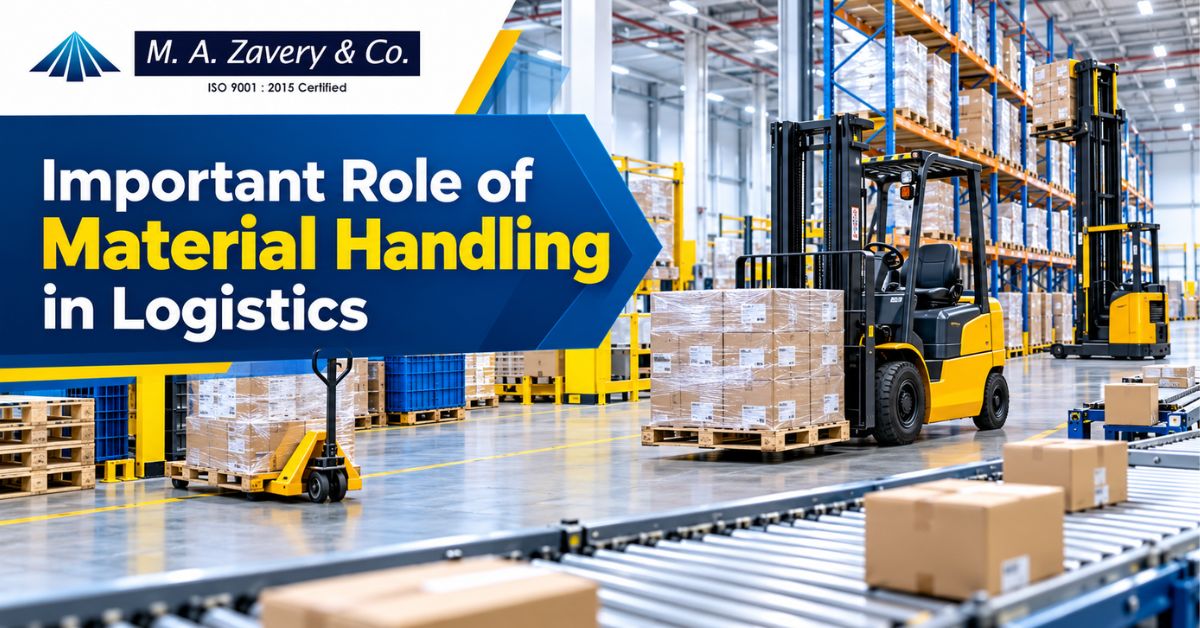
A truck arrives with three drums, forty pallets, and a crated machine. Somebody’s got to unload ’em. Check ’em. Store ’em. Pick ’em. Reload ’em. And not break anything or anyone. And that “somebody” is material handling, influencing almost every facet of a logistics operation. We’ll look at what it covers, where it fits and how to get it right.
Quick answer: Material handling is the movement, protection, storage and control of goods within a facility, or between a building and a vehicle. In logistics, it serves six major functions:
- It handles the movement of goods from receiving to storage to picking to shipping.
- It safeguards products against damage.
- It takes strain and injuries off workers.
- It takes up less space in storage.
- Accurate inventory control is provided.
- It helps to keep the labour and handling costs down.
Here’s why each one matters.
What Is Material Handling in Logistics?
Material handling is defined by industry sources as the movement of goods over short distances within a building or between a building and a transport vehicle. It covers the movement, protection, storage and control of materials in warehouses, factories and distribution centres. The job involves packing goods for shipment, loading and unloading vehicles and arranging materials in storage facilities.
There are three manners of handling:
- Manual: Manual lifting, carrying, pushing and stacking of loads.
- Mechanised Equipment such as hoists, forklifts and conveyors move the load and people control it.
- Automated: Goods are moved by robots and storage and retrieval systems with little human input.
In India, most warehouses and yards are a mix of all three.
Where Handling Fits in the Logistics Chain
All shipments go through the same steps. Handling is present at each.
- Receiving: unload the vehicle and inspect the goods.
- Put-away: The placement of goods in racks, floor stacks, or yards.
- Storage – Keep your goods safe and make them searchable.
- PICKING: Collect items for an order.
- Packing and staging: Prepare order for shipment.
- Loading: Load the outbound vehicle with goods.
- Transfer: Transfer loads between docks, yards and vehicles.
A weak link at any point delays the rest. A pallet in the receiving bay for six hours causes a backlog of everything that follows it.
Material Handling in Logistics by the Numbers
India’s logistics sector is big, and its cost is now better understood. The total logistics cost for 2023-24 is 7.97 per cent of GDP and 9.09 per cent of non-services output, a study conducted by the National Council of Applied Economic Research (NCAER) for the Department for Promotion of Industry and Internal Trade (DPIIT) said. Previous estimates of 13 to 14 per cent were based on partial or external data.
And the same study takes a hard look at warehousing. It says the average cost is around ?30 per sq ft per month, and manpower is the biggest cost component, accounting for about 30% of warehousing expenses.
That last figure is one to be reckoned with. Handling equipment determines how much labour a job requires, and labour is the largest cost in a warehouse. Every time a hoist or trolley takes a lift off a worker’s back, it changes the time and risk.”
Seven Roles Material Handling Plays in Logistics
1. It Keeps Goods Moving
Smooth handling keeps vehicles turning around quickly and keeps stock flowing between zones. Small delays build up. A slow unload creates a queue of trucks, and a queue creates missed slots and overtime. With the right equipment, a small crew can now unload, position and move loads that previously required a larger crew.
2. It Protects Products From Damage
Rough handling damages products. Broken drums, squashed cartons and bent steel cost money. Reduced product damage and waste is one of the major benefits consistently listed in material handling sources. Steady loads due to rated slings, matched equipment and controlled lifting. More control is achieved by crews when slow and steady hoists and smooth trolleys are used to place heavy or awkward items.
3. It Reduces Strain and Injuries
Warehouses and docks are messing up people. OSHA’s warehousing guidance identifies improper lifting and overexertion as a primary hazard for back injuries. It offers simple advice: install conveyors, overhead hoists or similar equipment and use powered equipment instead of manual lifts for heavy materials.
The NIOSH data adds heft. Musculoskeletal injuries cause about 30 per cent of occupational injuries that resulted in lost time, and material movers have the highest number of overexertion injuries, it says. Lifting, carrying, and moving loads can cause sprains and strains, some of the most common dock and warehouse injuries.
4. It Makes Better Use of Space
Good handling makes good use of height and floor space. When equipment can safely lift, position and stack loads, more can be stored per square foot. This is important because rent and space are real costs. Material handling guides note core benefits of better use of space, lower labour costs and less waste.
5. It Makes Loading and Unloading Safer
Docks are dangerous and busy. A university guide to loading dock safety lists hazards, including being pinned between lifts, the dock and a trailer; lifting and moving heavy or bulky items; and hazards associated with lifting devices and other moving equipment. Good equipment for the load, clear signals and training will reduce those risks.
There is no one loading dock standard in OSHA in the United States. It imposes some rules and general duty requirements to cover dock hazards. See what applies to your own state and country.
6. It Supports Inventory Control
“Control” is in the definition. The handling steps determine how quickly the stock is received, located, counted and dispatched. Many handling systems are connected to the warehouse management software that offers real-time data on stock levels, locations and movement. Accurate records in a simple yard are maintained by good staging, well-defined zones and consistent handling.
7. It Keeps Costs Under Control
Lower labour needs, fewer damaged goods, fewer injuries, quicker turnaround – all lower cost. The savings add up over the year. A hoist that saves one lost-time injury or one dropped machine can pay for itself.
Lifting and Rigging Gear in Logistics Yards and Warehouses
Forklifts and conveyors handle pallet traffic daily. They cannot lift machinery, steel sections, heavy drums, awkward crates and equipment that requires precise positioning. Lifting and rigging gear can manage these loads.
M.A.Zavery & Co. has been supplying Hoists, Winches, Wire Rope and Rigging Gear from Kolkata since 1983.
Its site lists these categories which logistics work might be suited to:
- Manual Hoists: Elephant C21 Series, H-100 Series Chain Block, Super 100, DAG 3t, YA Series Lever Hoist
- Electric hoists • Alpha and Beta Series • Stahl ST and STD chain hoists • Stahl SH wire rope hoists
- Pneumatic hoists: Tiger air hoists, TAH52 for 5 to 20 tonnes and TAH250 for 25 to 60 tonnes
- Positioning Trolley Series: plain trolley and manual floor crane
- Winches: Maxpull manual and electric winches.
- Rigging: Yoke G100 chain slings, wire slings, welded master links and Thiele shackles and lifting points
- Clasps: Camlok TTR girder stacking clasps, THS lifting clasps, TRU round stock grabs, and CR and MR rail clasps
Before you buy, check the rated load, lift height and duty details for each product page.
How to Choose Handling Equipment for a Logistics Operation
Just follow these 6 steps.
- Enumerate your loads. Note the weight, size, shape and frequency of movement of each.
- Follow the flow. Mark receiving, storage, staging, and dispatch on the floor plan.
- Discover the pain points. Look for the lifts that need three people or cause delays and injuries.
- Match the equipment to the job. Use forklifts and conveyors for pallets and hoists, trolleys and slings for heavy or awkward loads.
- Margin each unit. Add rigging weight, growth.
- The maintenance plan Develop inspection schedules and assign ownership.
Safe Use Rules for Lifting Gear
Good equipment is only good if you use it well. Maintain these habits:
- Do not overload.
- Always check your chains, hooks, latches and slings after each use.
- Use rated slings and shackles, not the load chain as a sling.
- Keep people away from suspended loads.
- Train each operator. Designate one signaler.
- Maintain inspection records and remove damaged equipment from service.
Local rules vary, so check the applicable standards for your site.
Next Steps
Material handling in logistics is a great example of something that is easy to forget until something breaks, spills or hurts someone. A quick plan gets you going:
- Walk your dock and warehouse and make a list of all your manual lifts.
- Flag loads that require more than one person.
- Match each flagged lift with a rated hoist, trolley, clamp or sling.
- Train the crew and establish an inspection routine.
- Review the setup every 6 to 12 months as volumes change.
FAQs
What is material handling in logistics?
It is the movement, handling, storage and control of products within a facility or between a vehicle and a building. It involves the unloading, storing, picking, packing and loading by means of manual, mechanised or automated methods.
Why is material handling important in logistics?
It moves goods, protects products, reduces injuries, uses space well and supports accurate stock records. In India’s logistics study, warehousing costs are largely driven by labour, meaning better handling is a direct cost of operations.
What equipment is used for material handling in logistics?
Operations forklift, conveyor, pallet truck, hoist, trolley, winch, sling, clamp. Regular flow is handled by pallet equipment. Hoists and rigging gear are used to lift heavy or difficult loads that other equipment cannot lift safely.
How does material handling reduce injuries?
Equipment takes the lifting, carrying and awkward reaches off workers. OSHA’s warehousing guidance cautions against manual lifts of heavy materials, suggesting instead conveyors, overhead hoists or powered equipment. And training and clear procedures offer additional protection.
How much does logistics cost in India?
The NCAER study for DPIIT estimates India’s logistics cost at 7.97 per cent of GDP for 2023-24, or 9.09 per cent of non-services output. Warehousing costs average ?30 per sq ft per month, and manpower is its highest cost.